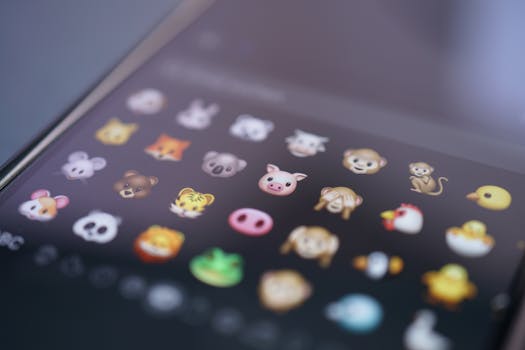
We live in a world saturated with visual shorthand. From the ubiquitous smiley face to the tearful one, emojis have become an integral part of our digital communication. But when it comes to the sensitive topic of mental health, the existing emoji palette often feels woefully inadequate. Are we truly able to convey the complexities of anxiety, depression, or even moments of profound peace with just a few pre-programmed icons? In my experience, the conversation around the mental health emoji is far richer and more nuanced than a simple selection of faces suggests. It’s less about finding the perfect emoji and more about understanding how we can use (or wish for) them to better articulate our inner landscapes.
The Limitations of a Standardized Palette
Let’s be honest: the current selection of emojis, while growing, often falls short. A simple 🙂 can signify anything from mild contentment to a forced, polite smile masking inner turmoil. Similarly, the 😢 or 😭 emojis, while clearly expressing sadness, don’t capture the dull ache of persistent low mood or the overwhelming burden of depression.
Oversimplification: Many mental health experiences defy easy categorization. A single emoji can’t represent the fluctuating nature of anxiety, the fog of brain fog, or the quiet strength found in managing chronic conditions.
Cultural Context: What one culture interprets as a sign of distress, another might see differently. This can lead to misinterpretations and further isolation.
Stigma Reinforcement: Using only overtly “sad” or “angry” emojis can inadvertently reinforce the idea that mental health struggles are always dramatic or outwardly visible, failing to acknowledge the silent battles many face.
The Evolving Language: How We Adapt
Despite these limitations, humans are remarkably adaptable communicators. We’ve learned to imbue existing emojis with new meanings, creating a unique dialect for discussing mental well-being. It’s fascinating to observe how a seemingly neutral emoji like the ☁️ (cloud) can be used to represent feeling overwhelmed or a sense of being in a haze.
Furthermore, the combination of emojis often tells a more complete story. A sequence like 🌧️➡️☀️ might signify moving through a difficult period towards healing. Or perhaps a simple 🫂 (hug) emoji, devoid of explicit emotional markers, becomes a powerful symbol of support and empathy when shared in a context of vulnerability. This creativity highlights our innate drive to connect and be understood, even when the tools provided are imperfect.
Seeking More Expressive Visual Cues
The demand for better visual representation is growing. Advocacy groups and individuals alike are pushing for the creation of more nuanced emojis that can accurately reflect the spectrum of mental health experiences. Imagine emojis that convey:
Inner Peace: Beyond a serene face, perhaps a visual representing quiet contemplation or a sense of groundedness.
Anxiety Manifestations: Not just a worried face, but icons that hint at racing thoughts, restlessness, or the feeling of being overwhelmed by stimuli.
Support and Resilience: Symbols that go beyond simple empathy to represent shared struggle, ongoing effort, or the act of reaching out for help.
The development of new emojis is a slow process, often requiring significant public support and consensus. However, each new addition, like the recently introduced understanding face (🤔) or the pleading face (🥺), offers another tool in our ever-expanding visual vocabulary.
The “Mental Health Emoji” as a Catalyst for Conversation
Ultimately, the discussion around the mental health emoji serves a vital purpose beyond just digital communication. It acts as a catalyst, forcing us to pause and consider how we articulate our inner states, both to ourselves and to others. It prompts us to think about what it truly means to be understood.
Encouraging Self-Reflection: Do the emojis you use accurately reflect how you feel, or are you defaulting to what’s expected?
Fostering Empathy: By understanding the limitations and potential interpretations of emojis, we can become more empathetic listeners and communicators.
* Driving Advocacy: The desire for better representation fuels the conversation and pushes for tangible change in digital platforms.
When we use emojis to discuss mental health, we’re not just sending a message; we’re participating in a collective effort to normalize these conversations. It’s about breaking down the stigma, one carefully chosen (or creatively adapted) visual cue at a time. The mental health emoji isn’t just a picture; it’s a step towards a more open, honest, and supportive digital dialogue about our well-being.
Wrapping Up: Embracing the Nuance, Advocating for Change
The journey to find the perfect mental health emoji is ongoing. While the existing options may be imperfect, our ability to adapt, combine, and imbue them with personal meaning is a testament to our communicative resilience. Let’s continue to use these digital tools thoughtfully, to be mindful of their limitations, and to actively advocate for more expressive and inclusive visual language. Because when our digital expressions can better mirror our complex human experiences, we pave the way for deeper understanding, greater connection, and ultimately, a more supportive world for everyone navigating their mental health journey.